
Why Are My Gums Receding?

If you notice your teeth looking longer or your gum line becoming uneven, you might be wondering: Why are my gums receding? In this article, we discuss the most common causes of gum recession and the periodontal care methods that can help address this issue.

Why Are My Gums Receding?

One of the most common causes for gum recession is periodontal disease (gum disease), a chronic infection of the gum tissue. Gum recession typically happens in advanced stages of gum disease. Other symptoms that might help identify gum disease include:
Read more
Featured image for Can Gum Disease Be Reversed?

Can Gum Disease Be Reversed?

Gum disease, also referred to as periodontal disease, is a chronic infection of the gum tissue. If left untreated, it can lead to gum recession and even tooth loss in its advanced stages. Gum disease can also be detrimental to your overall health; specifically, it is linked to impacts on the lungs, joints, and heart. But can gum disease be reversed? In this article, we discuss the treatment methods that modern periodontics can offer.

Read more
Young woman showing healthy gums to represent reasons to visit a periodontal specialist.

9 Reasons To Visit A Periodontal Specialist

Periodontal care is a branch of dentistry that focuses on the prevention and treatment of periodontitis (gum disease), a chronic infection that affects the gums and jawbone. Below, we discuss nine reasons to visit a periodontal specialist. 

9 Reasons To Visit A Periodontal Specialist

Receding Gums

Gums that “pull away” from your teeth, exposing more of their surfaces, are called receding gums. Receding gums can jeopardize the health of your teeth because the top part of their roots becomes exposed to bacteria, acid, and plaque buildup. Roots are more vulnerable to these risk factors because they are not covered with enamel like the rest of the tooth but by a softer material called cementum. Thus, cavities and tooth decay appear faster on the exposed roots than on the crowns of the teeth.

Read more
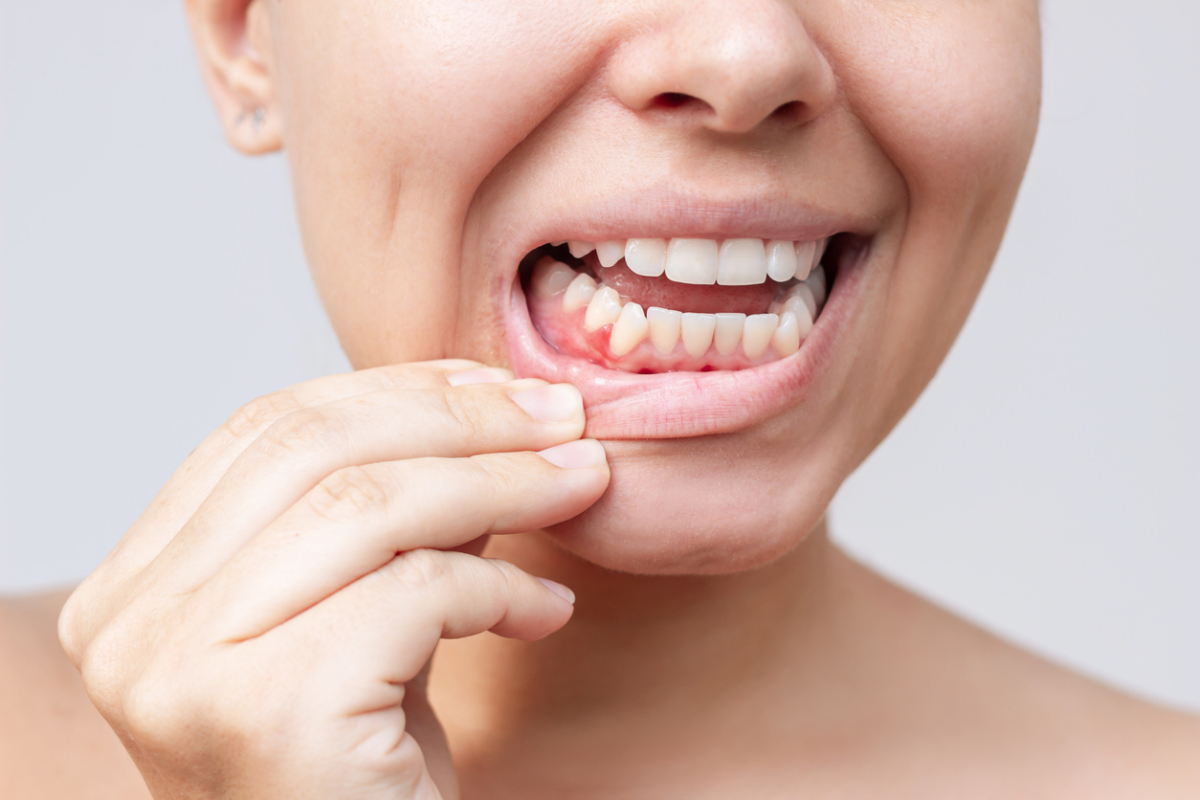
The image shows a closeup of a woman's teeth and gums affected by periodontal disease. The intention is to show how to protect against periodontal disease.

How To Protect Against Periodontal Disease

Gum disease is common among patients in the US. However, not many people know that if left untreated, periodontitis can cause a variety of severe oral and general health issues. The good news is that it can also be prevented with proper at-home and professional periodontics care. Please read this article to learn how to protect against periodontal disease.

What Is Periodontal Disease?

Periodontal disease, or gum disease, is a bacterial infection that can affect the soft tissue around teeth and, in more severe cases, the jaw bone tissue and other organs in the body.

Read more
